Tiếng Việt
 English
 简体中文
简体中文

Not all commercial premises are easy to lease or maintain their value, even when located in potentially attractive areas. Factors that may seem minor, such as being located deep inside an alley, having insufficient parking, or having inadequate electrical and water infrastructure, can significantly affect the value of the premises. Learn about the factors that reduce the value of commercial premises to avoid overpaying for rent or negotiate a better rental price.
1. Factors that reduce the value of commercial premises
Not every commercial property can maintain its expected market value, even when located in an area considered to have strong potential. Below are factors that can significantly reduce the value of commercial premises, which property owners should understand before setting rental or sale prices.
1.1 Located deep inside an alley, difficult to find or identify
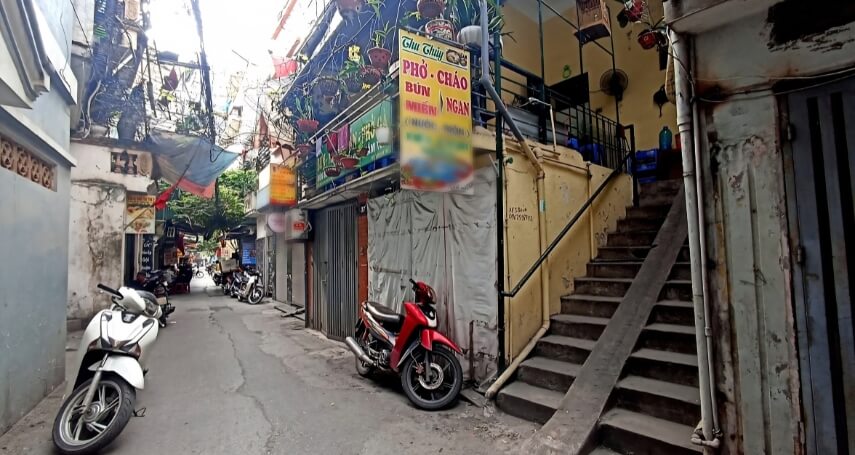
Commercial premises located deep inside an alley often lose a significant portion of walk-in customers, who account for a large share of customers in retail and F&B businesses. Online marketing costs to attract customers to a difficult-to-find location can be 2-3 times higher than for street-front premises because businesses must rely heavily on advertising rather than natural foot traffic.
In the long term, this type of premises is generally suitable only for warehouses and factories, virtual offices, or hidden-concept spas and cafés, which require strong branding to encourage customers to actively seek them out. The commercial value of premises located deep inside an alley (less than 3m wide) is typically only 30-50% of that of street-front premises in the same area.
1.2 Insufficient parking and inconvenient sidewalks
If the premises are located on a road where cars are prohibited from parking, have no sidewalk space for motorbikes, or are in an area where sidewalks are frequently subject to strict enforcement, customers tend to choose competitors with more convenient parking, especially for businesses where customers need to stay for longer periods.
Businesses that require customers to stay on-site, such as F&B, fashion stores, and showrooms, may negotiate significantly lower rents or outright reject the premises if this factor is lacking. Commercial spaces without adequate parking are often vacant for longer periods, and their rental prices may be significantly lower than those with spacious sidewalks and convenient parking nearby.
1.3 Legal, zoning, or usage restrictions
This is one of the biggest risks that businesses need to pay particular attention to. If the premises are subject to pending zoning plans, land disputes, or lack a land-use certificate, tenants may be unable to register a business license or complete construction procedures, particularly for regulated industries such as karaoke, clinics, and education.
Commercial premises with legal issues are often subject to significant price pressure in the market. Landlords may have to accept short-term leases (under 1-2 years) at below-market rates to compensate for the risks borne by tenants.
1.4 Deteriorated premises or difficult-to-renovate layouts
The building structure directly affects the ability to make effective use of commercial space. Common characteristics that can cause premises to be valued lower include:
- Multiple structural columns in the middle of the space, obstructing interior layouts and product displays
- Ceilings that are too low (below 2.7m), making it difficult to install electrical systems, air conditioning, or suspended ceilings
- The building being divided into multiple rooms by permanent walls that cannot be removed to create an open-plan space
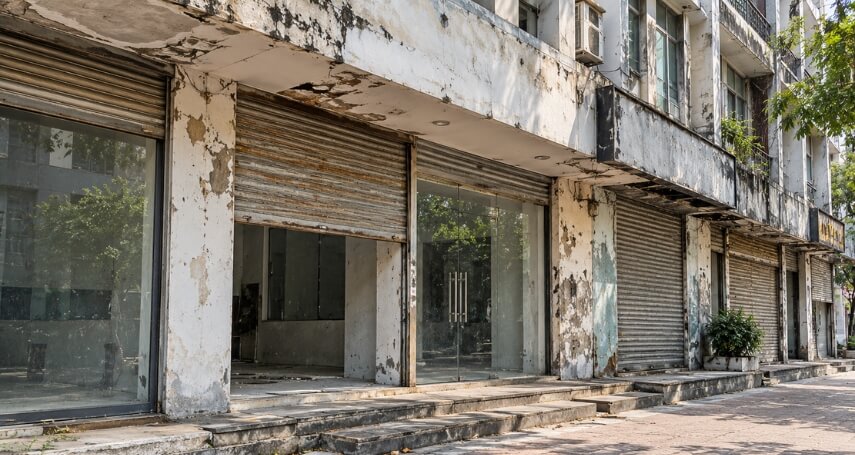
- Deteriorated floors and walls, including mold, cracks, and water leakage, requiring major renovations before use
For these premises, tenants may have to spend significant capital expenditure (CapEx) on renovations. As a result, they often negotiate to deduct these costs directly from the rent, request 1-3 months of rent-free occupancy, or negotiate a 15-25% reduction in monthly rent.
1.5 Low pedestrian and vehicle traffic
Commercial premises located on one-way streets, roads with solid medians that limit access, areas with low traffic, or newly developed urban areas with few residents often receive less traffic. Low traffic means almost no natural brand exposure, making businesses heavily dependent on active advertising.
Premises located on “dead-end” commercial routes or roads with unfavorable traffic lane arrangements can experience a significant decline in value. Even if the rent is reduced by half, landlords may still struggle to find long-term tenants because customer traffic is the key factor, not simply the rental price.
1.6 Electrical, water, and sanitation infrastructure that does not meet business needs
Many businesses require technical infrastructure that exceeds normal residential standards. Common limitations that make commercial premises for rent difficult to lease include:
- Only residential electricity is available, with insufficient capacity for businesses that require three-phase power, such as restaurants and hair salons
- Weak drainage systems that are prone to clogging under frequent commercial use
- Shared bathrooms or plumbing with the landlord’s property, causing inconvenience and a lack of privacy during operations
- No odor-control system, making it difficult to meet the needs of F&B businesses that require frequent cooking
Tenants may immediately lose interest if the landlord is unwilling to invest in upgrading the infrastructure, causing these types of premises to be offered at significantly lower rental prices than spaces that are ready for operation.
2. Why do commercial premises on the same street have different values?
Commercial premises on the same street do not necessarily have the same commercial value, as their value also depends on more specific factors such as location, visibility, and structural characteristics. The following are practical reasons that explain these differences:
- Solid median: If a road has a long solid median without U-turn points, the premises may lose up to 50% of potential customers from the opposite lane because they are reluctant to make a U-turn.
- Location near an intersection: Premises near an intersection, with a wide corner or near a traffic light, tend to have higher value on the street because customers spend more time waiting at red lights, increasing brand visibility.
- Multi-directional visibility (270-degree view): The premises can capture traffic from 2-4 incoming directions, while a property in the middle of a row typically has only one direct viewing direction.
- Business cluster: Streets with many major brands and busy restaurants can form a concentrated shopping area and drive commercial rental prices significantly higher. In contrast, areas dominated by warehouses, mechanical dealerships, or walls surrounding government offices and schools are often less active and have lower rental prices.
- Frontage width: A 100 m² property with an 8m frontage generally has higher rental value than a 100 m² property with only a 4m frontage and a deep floor plan, because wider frontage allows businesses to optimize product displays and attract attention from a distance.
- Practical feng shui issues: Premises directly facing a road intersection, with an irregular shape that narrows toward the back, or with a floor level lower than the road and therefore prone to flooding during heavy rain may lose significant value compared with neighboring properties with more regular layouts.
3. How to assess the overall value of commercial premises before renting
Before deciding to commit financially, the premises should be evaluated comprehensively based on multiple criteria rather than simply looking at the initial asking rent. The following factors should be carefully checked:
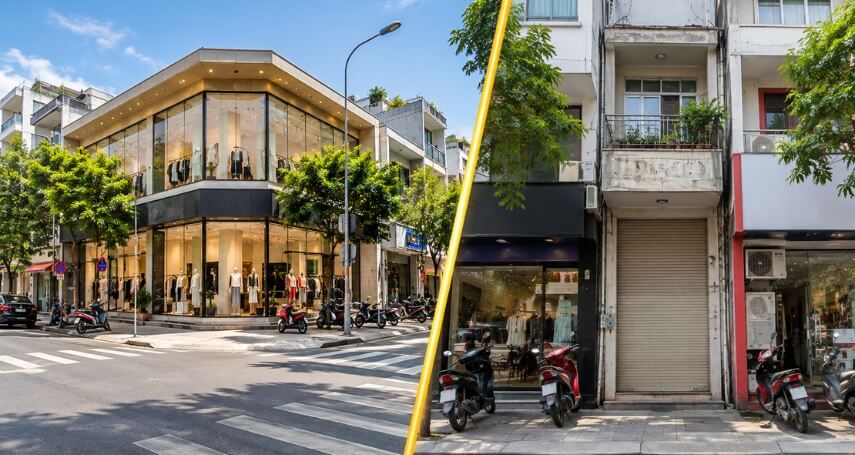
- Location and accessibility: Assess whether the premises are located on a two-way street, near an intersection, or obstructed by a median, trees, utility poles, or other obstacles.
- Pedestrian and vehicle traffic: Survey the location at different times of the day to determine actual customer traffic instead of relying on impressions from a single visit.
- Structure and condition: Check ceiling height, the number of structural columns, signs of deterioration, and whether the premises can be renovated to suit the intended business model.
- Technical infrastructure: Verify electrical capacity, water supply and drainage systems, and whether an odor-control system can be installed if operating an F&B business.
- Legal status and zoning: Check the land-use certificate and zoning status, and avoid premises subject to pending zoning plans or legal disputes.
- Frontage width compared with total area: Prioritize premises with a wider frontage relative to their depth, as this helps optimize display space and visibility.
4. Drawbacks that can be used to negotiate rental prices
Not every drawback of a commercial space is necessarily a disadvantage for tenants. When used appropriately, these drawbacks can provide a basis for negotiating better rental terms. Factors such as extensive renovation requirements, inadequate electrical and water infrastructure, or limited parking availability can all be used as grounds for requesting a lower rent or several rent-free months to offset renovation costs.
Among these factors, particular attention should be paid to legal and zoning issues, as they are both major disadvantages affecting long-term operations and strong grounds for negotiation. If the premises are subject to pending zoning plans or lack a land-use certificate, tenants may request a significantly lower rent than comparable premises with complete legal documentation, while also negotiating a short-term lease to minimize risk.
5. Find commercial premises in prime locations with A-Connection
After understanding the factors that affect the value of commercial premises and how to evaluate them comprehensively before renting, finding a reputable consulting provider can help you save time and avoid unnecessary risks. A-Connection provides comprehensive commercial real estate solutions, from commercial leasing consultation to construction and renovation services tailored to your business needs.
Contact information:
- Phone: 0968 68 80 81
- Website: www.a-connection.com.vn
- Address: 708-710-712 Cach Mang Thang Tam Street, Tan Son Nhat Ward, Ho Chi Minh City
Conclusion
The value of commercial premises depends not only on having a good location but also on a wide range of factors, including technical infrastructure, legal status, building structure, and the specific position along a street. Understanding these factors can help you avoid renting premises with low commercial value and identify ways to use existing drawbacks to negotiate better rental terms. If you need help finding commercial premises, contact A-Connection for detailed consultation.
See also: