Tiếng Việt
 English
 简体中文

The growth of the technology sector has driven demand for larger workforces and more professional working environments. Unlike some traditional industries, technology companies often have specific requirements for network infrastructure, electrical systems, flexible workspaces, and future expansion capabilities. Therefore, renting an office for a technology company is not simply about finding a workplace; it is also a strategic decision that directly affects operational efficiency and long-term business growth.
So, what factors should technology companies consider when choosing an office? Below are seven important criteria to help businesses evaluate office spaces and find a workspace that meets their actual operational needs.
1. Technology infrastructure and reliable internet connectivity
For businesses operating in information technology, software development, application development, or digital services, technical infrastructure is one of the top priorities when renting an office. A stable, high-speed Internet connection with minimal downtime enables employees to work efficiently with servers, cloud computing platforms, online data systems, and project management tools.
Businesses should investigate the building’s Internet connectivity options, telecommunications cabling infrastructure, supported Internet service providers, and backup solutions in case of connection failures. For companies that require uninterrupted operations, using multiple Internet service providers or setting up backup connections is also worth considering.
In addition, businesses should inspect the electrical system, power outlets, and power supply capacity for computers and specialized equipment. If the company requires a dedicated server room or technical equipment area, ventilation, cooling systems, and safe operating conditions should also be carefully evaluated.

2. Office space suitable for workforce size
Workforce size is a key factor directly influencing the office area required when renting an office for a technology company. A business with software developers, quality assurance specialists, sales employees, and management staff will require different workspace arrangements depending on the nature of their work.
Rather than basing the decision solely on the current number of employees, businesses should calculate the required office area based on recruitment plans, departmental structure, and functional space requirements. The workspace should provide sufficient room for employees while accommodating meeting areas, management offices, reception areas, and other facilities that support internal operations.
For businesses experiencing rapid growth, it is advisable to prioritize office spaces that allow for additional floor area or flexible layout adjustments when needed. This helps reduce the likelihood of relocating within a short period while minimizing moving expenses and disruptions to business operations.
3. Flexible workspace design
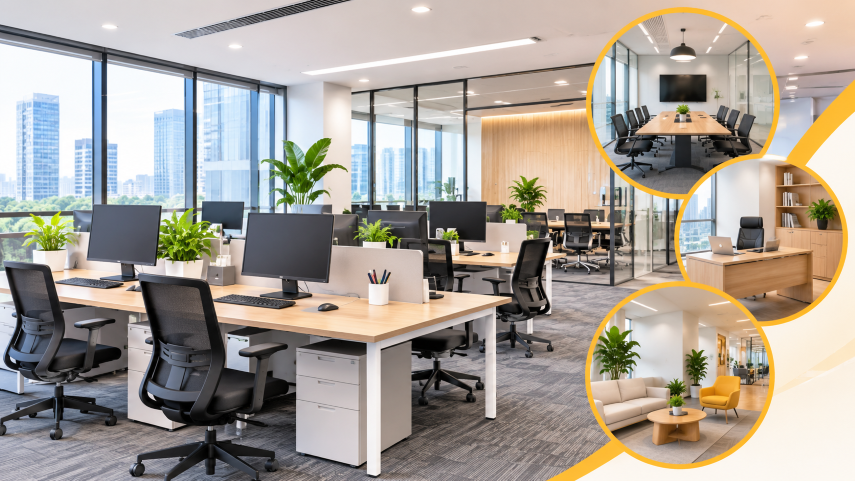
Technology companies typically require a working environment that supports both individual tasks and team collaboration. Therefore, when searching for an office for a technology company, businesses should prioritize spaces with open layouts, easily configurable areas, and flexible interior arrangements.
A suitable workspace can combine focused workstations, meeting rooms, quick discussion areas, and relaxation spaces. This layout allows employees to choose an environment that best suits their tasks while encouraging communication and collaboration between departments.
Beyond functionality, businesses should also pay attention to lighting, air conditioning, ventilation, and soundproofing. These factors contribute to employee comfort, particularly for positions that require extended periods of working in front of computer screens.
4. Convenient Location for Employees and Business Partners
Location is an important consideration when renting an office for a technology company, especially for businesses that frequently recruit employees, meet clients, or work with business partners. An office situated in an area with convenient transportation access can help employees reduce commuting time while facilitating business transactions.
Businesses may prioritize areas with a high concentration of office buildings, convenient access to major roads and public transportation, and nearby amenities such as banks, restaurants, and convenience stores. If the company regularly welcomes clients or international business partners, the office location should also provide convenient connections to commercial districts and major economic centers.
However, choosing an office in a prime central location with high rental rates is not always necessary. Businesses should balance location, accessibility, and budget to find a property that best supports their operational requirements.
You may also be interested in:
5. Security systems and technical safety
Technology companies often store large amounts of important data, internal documents, and valuable equipment. Therefore, security should be carefully evaluated when selecting an office.
Businesses should investigate access control systems, surveillance cameras, security personnel, and visitor management procedures. For companies with dedicated equipment storage areas or server rooms, it is essential to assess access restrictions and ensure that the workspace meets their security requirements.
In addition to general security, fire prevention and firefighting systems are another essential consideration. Businesses should inspect fire safety equipment, emergency exits, fire alarm systems, and the building’s emergency response procedures. These measures help protect employees and assets while ensuring business continuity.
6. Rental costs and operating expenses
Budget is one of the deciding factors when businesses choose an office for their technology operations. Beyond the advertised rental price, companies should calculate the total cost of occupancy throughout the lease term to avoid unexpected expenses.
Some key expenses to consider include:
-
- Office rent: The rental rate is determined based on the leased area and contract duration.
- Management fees: Charges for maintaining and using the building’s common areas and shared facilities.
- Electricity, water, and Internet costs: Businesses should clarify billing methods, applicable rates, and which services are included in the rent.
- Parking fees: These depend on the number of employees, vehicles, and the building’s parking policies.
- Interior fit-out costs: Including design, space partitioning, network installation, electrical systems, and other finishing works.
- After-hours charges: Businesses should clarify the policies and fees for using air conditioning, elevators, and technical services outside regular operating hours.
Preparing a detailed cost estimate allows businesses to compare different office options more accurately. In particular, for technology companies in the startup or expansion phase, controlling office-related expenses helps preserve financial resources for product development and business operations.

7. Lease agreement terms and future expansion potential
Before deciding to rent an office for a technology company, businesses should carefully review all lease agreement terms. Important provisions include the lease term, security deposit, payment methods, rental adjustments, handover date, and each party’s responsibilities for repairs and maintenance.
Businesses should also clearly establish the scope of renovation and fit-out works, permissions for installing network infrastructure and technical equipment, signage regulations, and office restoration requirements upon lease termination. If the company needs to operate outside regular business hours or maintain continuous operations, all related policies should be clarified from the beginning.
Another important consideration is the potential for future expansion. Technology companies often experience relatively rapid workforce growth and changes in operational models. Therefore, businesses should prioritize landlords or office buildings that offer flexible policies for lease renewal, additional space rental, or relocation to larger premises when business requirements change.

Common mistakes to avoid when renting an office for a technology company
Even when businesses have clearly identified their workspace requirements, they may still encounter difficulties if they evaluate office spaces based solely on rental prices or external appearance. Some common mistakes to avoid include:
-
- Focusing only on rental prices: Overlooking management fees, electricity, Internet, and other operating expenses can result in actual costs exceeding the initial budget.
- Failing to inspect network infrastructure: Unstable Internet connectivity or a lack of backup solutions can disrupt the operations of the entire team.
- Renting an unsuitable office area: An office that is too small can create working difficulties, while an excessively large space increases fixed costs.
- Ignoring future expansion potential: An inflexible workspace may force businesses to relocate as their workforce grows.
- Overlooking lease agreement terms: Unclear provisions regarding the lease term, rent increases, renovations, and handover conditions can lead to disputes during the tenancy.
Businesses should conduct on-site inspections, check technical facilities, and carefully review leasing conditions before making a final decision.
Conclusion
Renting an office for a technology company requires careful consideration of multiple factors, including Internet infrastructure, electrical systems, office area, workspace design, location, costs, and lease agreement terms. A suitable office should not only meet current working requirements but also adapt to the company’s future growth plans.
To find the right office, businesses should clearly define their workforce size, budget, and technical requirements before exploring available options on the market. Evaluating all relevant criteria from the outset can save time, minimize potential risks, and optimize the efficiency of office space utilization.
A-Connection supports businesses throughout the process of finding and selecting commercial properties and office spaces that meet their actual requirements. If your company is planning to rent an office for its technology operations, contact A-Connection for consultation on suitable office solutions in terms of location, floor area, and budget.
A-Connection – Accompanying you on your journey to finding the ideal business space.