Tiếng Việt
 English
 简体中文
简体中文

When starting or expanding a business, leasing commercial space is one of the most critical decisions you will make. However, many people still approach it in a simplistic way: find a nice location, negotiate a reasonable price, and sign the contract.
In reality, many stores, restaurants, showrooms, and service businesses fail early—not because of poor products, but because they chose the wrong location from the beginning. The main reason often lies in the lack of commercial leasing knowledge and a comprehensive perspective.
This article compiles essential commercial leasing knowledge from A-Connection to help you understand the fundamentals and make the right decisions for your business model.
Leasing space is about “fit,” not “the best-looking option”
One common mistake is always trying to find the most attractive or expensive location. In reality, there is no single “best” space that works for every business.
What matters more is how well the location fits your business model and target customers. A busy location does not guarantee success if the people passing by are not your ideal customers. On the other hand, a less prominent space that matches your target audience can generate stable revenue.
This is the core principle of commercial leasing knowledge: it’s not about choosing the most attractive location, but the most suitable one.

Types of commercial spaces based on business models
Retail and storefront spaces
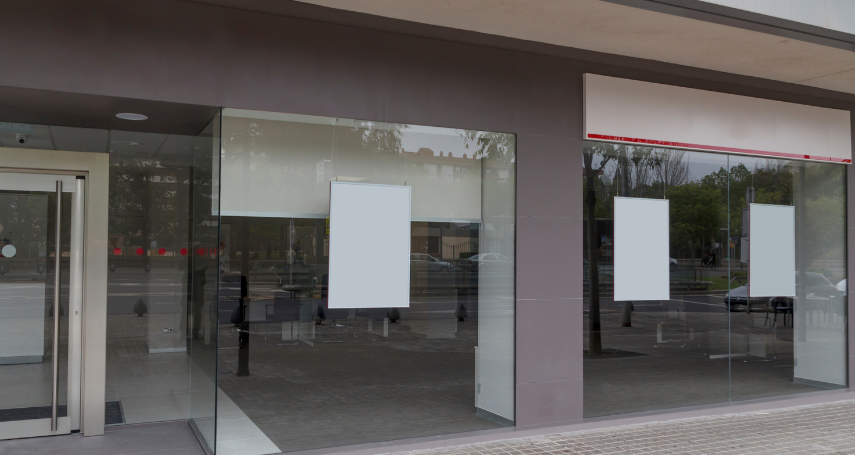
Suitable for industries that rely on walk-in customers such as fashion, cosmetics, and electronics. These spaces typically prioritize street-front visibility and high foot traffic.
F&B spaces (restaurants, cafes)
For food and beverage businesses, location is important, but so are parking availability, space layout, and local consumer habits. A busy street with limited stopping space may not be suitable for F&B.
Showroom and display spaces
A showroom is not just a place to sell products—it is also a space for customer experience. Therefore, besides location, businesses must pay attention to size, design, and brand presentation.
Learn more: How to choose a showroom location effectively
Office and service spaces
For offices, spas, or training centers, key factors include accessibility, surrounding environment, and reasonable operating costs.

Why do many people choose the wrong space even after surveying?
The problem lies in perspective, not data
Many people spend time surveying locations but still make inaccurate decisions. The issue is not the lack of data, but how the data is interpreted.
Most only observe foot traffic without analyzing customer quality. A crowded area that does not match your target audience will not generate business results. This is a common mistake when lacking commercial leasing knowledge.
You can also explore commercial leasing experience to avoid common risks.
Misjudging based on timing
Evaluating a location at a fixed time can lead to incorrect conclusions. Some areas are busy during the day but quiet at night, or vice versa.
Assessment should be done at different times to gain a more accurate understanding.
Rental cost: don’t think short-term
Cheap does not always mean cost-effective
A low-cost space without customers will force you to spend more on marketing. Meanwhile, a more expensive but well-positioned space may deliver better results.
Total cost is what really matters
When evaluating a space, consider the full picture: rent, operating costs, marketing expenses, and expected revenue.
This is a key approach in commercial leasing knowledge to avoid long-term mistakes.

Commercial space is not just for selling—it is a marketing tool
A good location can help your brand gain visibility every day without additional advertising costs. This is an advantage many businesses overlook.
Especially in a competitive market, location and space design can significantly impact customer experience.
When should you work with a leasing consultant?
Not everyone has the time or expertise to evaluate commercial spaces effectively. In many cases, working with a professional service helps save time and reduce risks.
Learn more: commercial leasing services
FAQ – Frequently Asked Questions
What should you prepare before leasing a space?
You need to clearly define your business model, target customers, and budget before starting your search.
How do you know if a location is suitable?
It should be evaluated based on location, target customers, and profitability—not just rental price.
When should you reassess the effectiveness of a location?
Typically, after 3–6 months of operation, you will have enough data to evaluate its performance.
Leasing commercial space is not just about finding a place—it is a strategic decision. With the right commercial leasing knowledge, you can avoid common mistakes and optimize long-term business performance.
Contact A-Connection today for expert advice and to find the right commercial space for your business model.