Tiếng Việt
 English
 简体中文
简体中文

In many industries, a showroom is no longer just a place to display products—it has become a strategic “brand touchpoint.” Customers don’t simply visit to browse; they come to experience, compare, and build trust before making a purchase decision.
That’s why showroom space rental should not be viewed as a fixed cost, but rather as a direct investment in brand awareness and long-term business growth.
A Showroom Is Not a Store – and You Can’t Choose a Location the Same Way
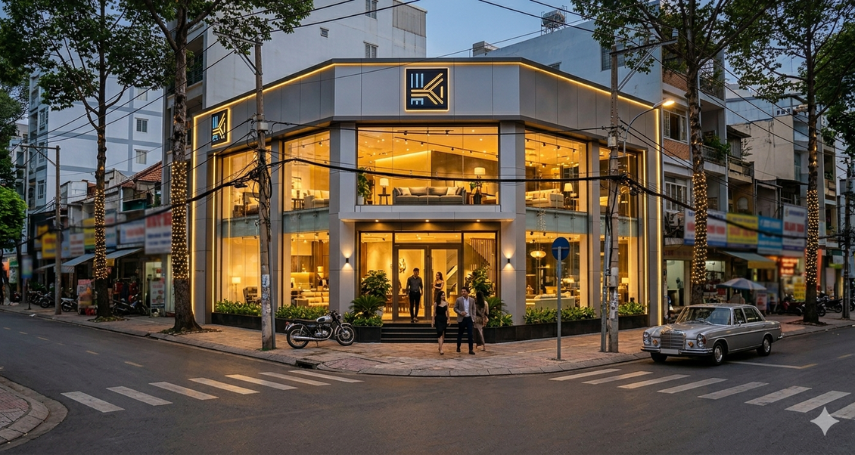
One common mistake is applying retail store location logic to showroom leasing. While stores focus on quick sales, showrooms are designed to create experience and emotional connection with the brand.
This leads to a key insight: high foot traffic alone does not guarantee success. A good showroom location must align with the right target audience, behavior patterns, and consumption context.
For example, even with a large frontage, a high-end furniture showroom in a standard residential area may underperform compared to one located in a modern urban district, where customers have higher purchasing power.
The Best Location Is Not the Most Expensive – It’s the Most Suitable
Understanding the True Value of a Showroom Space
Professional consultants in showroom leasing rarely start with budget. Instead, they ask: who are your customers, and where do they usually appear?
The real value of a space lies in its ability to reach the right audience—not in its rental price.
Why the Same Location Can Deliver Different Results
In practice, some businesses accept rental costs that are 20–30% higher but still achieve superior results. Meanwhile, cheaper spaces often fail to generate proportional value.
The difference lies in whether the location attracts the right customers. If it does, the showroom can generate consistent organic traffic. If not, businesses will need to compensate with higher marketing expenses.
Showroom Space Design Directly Impacts Customer Dwell Time
Space Influences Customer Behavior
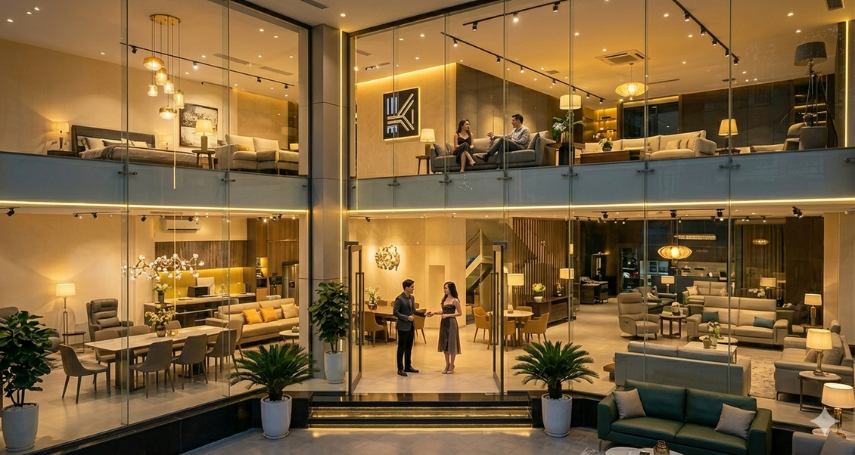
If location gets customers in, the space determines whether they stay. An effective retail showroom space should feel comfortable, easy to navigate, and clearly structured for experience.
Customers need enough room to explore, test, and interact with products. If the space feels cramped or difficult to access, they are more likely to leave quickly.
Common Design Mistakes That Reduce Showroom Performance
Many showrooms fail to maximize their potential despite having a good location. The main issues often come from poor layout: overcrowded displays, narrow walkways, inadequate lighting, or lack of focal points.
When planning to rent a showroom space, businesses should map out the customer journey in advance—where customers will walk, where they will stop, and what creates the strongest impression.
Real-World Site Visits – An Overlooked Factor
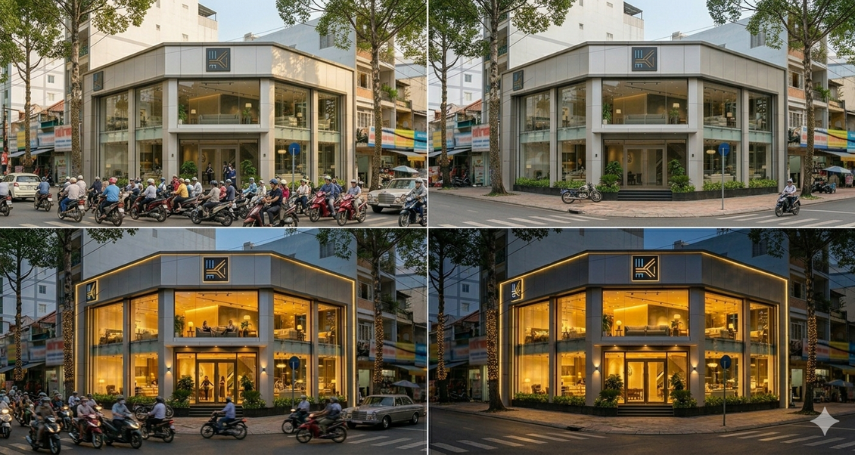
Many rental decisions are made after a single daytime visit. However, customer behavior changes depending on the time of day and week.
Some streets are crowded during rush hours but quiet in the evening—when many customers actually visit showrooms. Others may seem calm during the day but become lively at night.
Therefore, evaluating a showroom location at different times is essential to accurately assess its real potential.
Rental Cost Should Be Viewed from a Long-Term Perspective
Don’t Judge a Space Based on Price Alone
Cost is always a sensitive factor in showroom space rental, but focusing only on monthly rent can lead to poor decisions.
A good location can reduce marketing costs, increase organic traffic, and improve conversion rates. On the other hand, an ineffective space will increase total business expenses over time.

Stability Matters More Than Short-Term Savings
A showroom takes time to build brand recognition. Therefore, long-term lease agreements, clear terms, and location stability are just as important as rental cost.
Key Insight: A Showroom Is a Marketing Tool, Not Just a Sales Point
In today’s evolving consumer landscape, a showroom acts as a “physical marketing channel.” Customers may walk by, get attracted by the facade, step inside for an experience, and later engage with the brand online.
This journey is extremely common but often underestimated.
That’s why when choosing a showroom space rental, businesses should think beyond direct sales. A good showroom should increase visibility, enhance brand recall, and build trust from the first interaction.
Solutions to Help You Choose the Right Showroom Space from the Start
Searching for a showroom independently can be time-consuming and risky in terms of location, pricing, and legal factors. That’s why many businesses turn to professional consultants for industry-specific guidance.
Explore now: showroom space rental
Learn more: experience in renting commercial space to avoid risks
FAQ – Common Questions from Businesses
Should you choose a low-cost showroom space?
A low price only makes sense if it still targets the right audience. Otherwise, any savings will quickly be offset by increased marketing costs.
Should a showroom be on a street frontage or in a shopping mall?
Street frontage enhances brand visibility, while malls provide stable foot traffic. The choice depends on your business strategy.
How long does it take for a showroom to be effective?
Typically, it takes 3–6 months for a showroom to deliver noticeable results, provided the location and strategy are aligned.
Showroom space rental is a strategic decision that directly impacts brand growth. The right choice helps businesses reach customers effectively and build a sustainable foundation for long-term success.
Contact A-Connection today for expert consultation and to find the most suitable showroom space based on your industry, budget, and business goals.