Tiếng Việt
 English
 简体中文

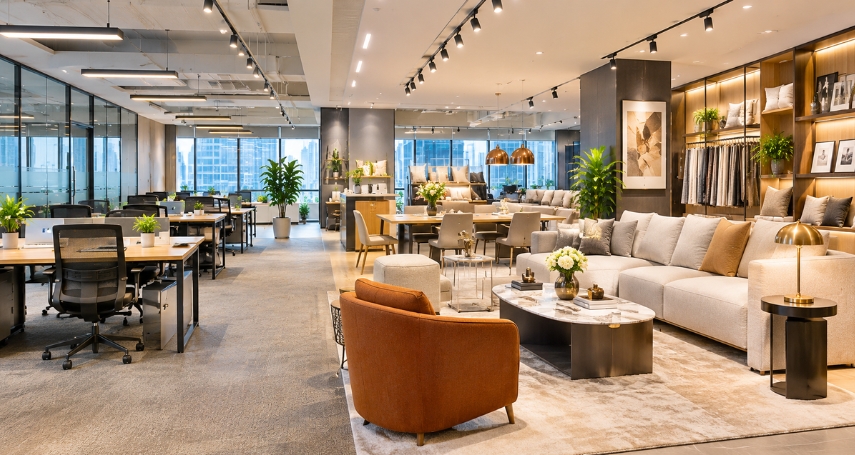
Many businesses want to combine their workspace with a product display area to optimize rental costs and provide a convenient space for welcoming customers. However, not every industry is suited to this model. The following article will analyze which industries are best suited for an office-showroom combination and the factors to consider when choosing a suitable space.
1. Industries suited to an office-showroom combination
An office-showroom combination is suitable for businesses that need both a workspace and an area to display products and welcome customers. This model is particularly effective for industries where customers need to experience products firsthand, examine them, or receive consultations before making a purchase.
1.1 Furniture and home decoration
The furniture industry is well suited to an office-showroom combination because customers often want to examine materials, colors, designs, and experience products before making a purchase decision. Businesses can arrange display areas for sofas, tables, chairs, cabinets, shelves, and decorative lighting alongside workspaces and design consultation areas.
A suitable commercial space should have a large floor area, an open layout, and minimal obstructive columns to make it easier to arrange product samples. Commercial townhouses, ground floors of buildings, or spaces with large frontages are preferable, as they facilitate furniture transportation and installation.
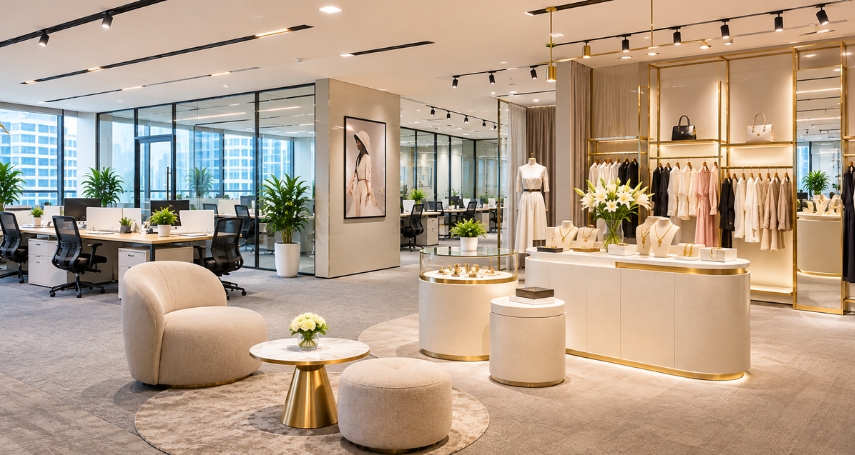
1.2 Fashion, accessories, and jewelry
Fashion, accessory, and jewelry brands can use showrooms to introduce their collections, allowing customers to examine materials, try on products, and receive consultations in person. The office area at the back can be used for order management, marketing, customer service, and business operations coordination.
A suitable space should have a recognizable frontage, good lighting, and enough room for display areas, fitting rooms, or glass display cabinets. For high-value jewelry and accessories, businesses should prioritize spaces with security systems, surveillance cameras, and controlled access.
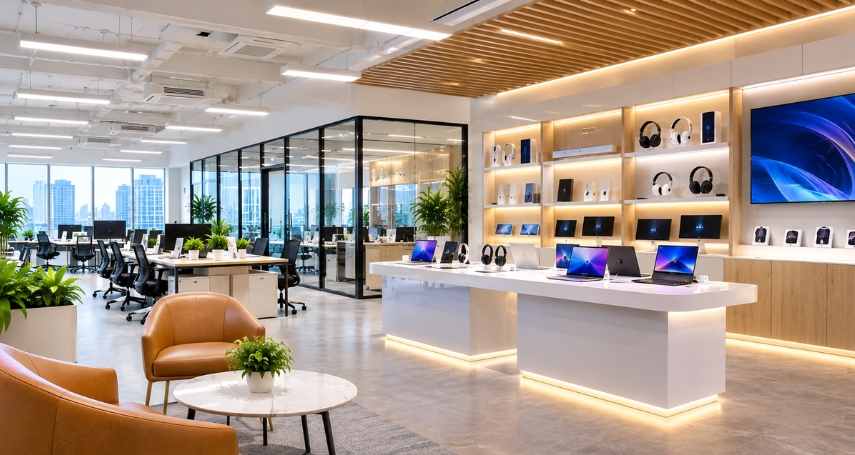
1.3 Electronics and technology equipment
Businesses selling electronics and technology equipment can use showrooms to let customers experience products firsthand, such as computers, smartphones, audio equipment, and smart home appliances. Staff can also provide consultations on configurations, features, warranty policies, and technical support at the same business location.
The space should have a stable electrical system, high-speed internet, and sufficient room for product experience areas. Ground-floor locations, shopping malls, or streets with high customer traffic are more convenient for product displays and reaching potential buyers.
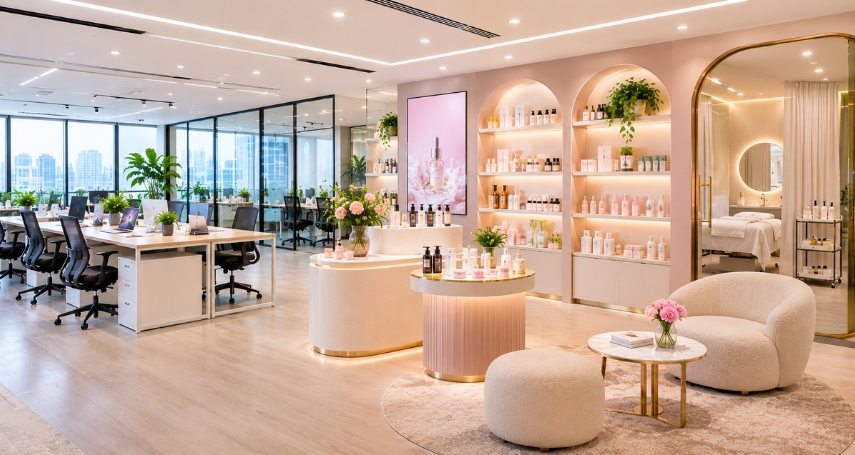
1.4 Cosmetics, beauty, and spas
The cosmetics and beauty industry is well suited to this model because customers often want to experience products, receive consultations, and try them before purchasing. Businesses can combine cosmetics display areas, consultation counters, skincare areas, or small treatment rooms with workspaces for management and sales teams.
The space should have a clean design, suitable lighting, and water supply and drainage systems if spa or skincare services are offered. Businesses should prioritize spaces that can be divided into separate display areas, customer reception zones, and private service rooms while meeting relevant industry-specific business requirements.
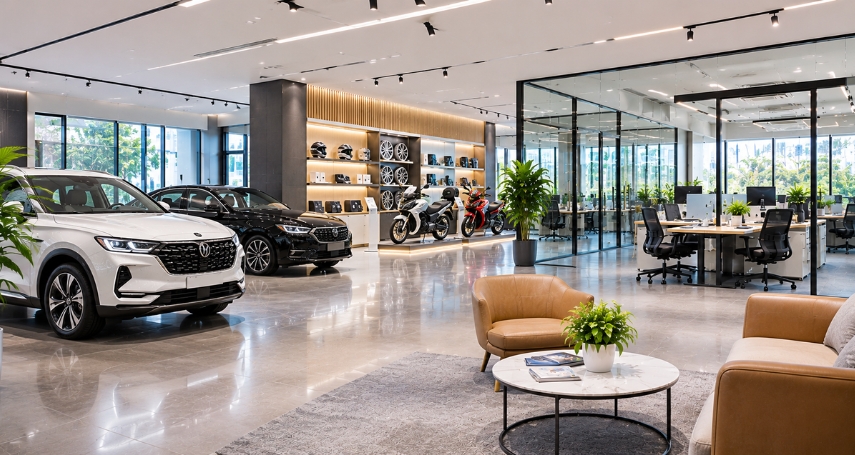
1.5 Automobiles, motorcycles, and transportation equipment
Businesses selling automobiles, motorcycles, and transportation equipment can combine product display areas with sales offices, consultation spaces, and contract processing areas. Customers can view actual vehicle models and equipment, discuss technical specifications, and receive quotations at the same location, helping shorten the consultation process.
The space should have a large floor area, flooring with suitable load-bearing capacity, and convenient access for vehicles. Locations along major roads, in commercial areas, or in places with parking facilities are more suitable. Businesses should also check regulations concerning product displays, traffic access, and fire prevention and firefighting.
1.6 Real estate and consulting services
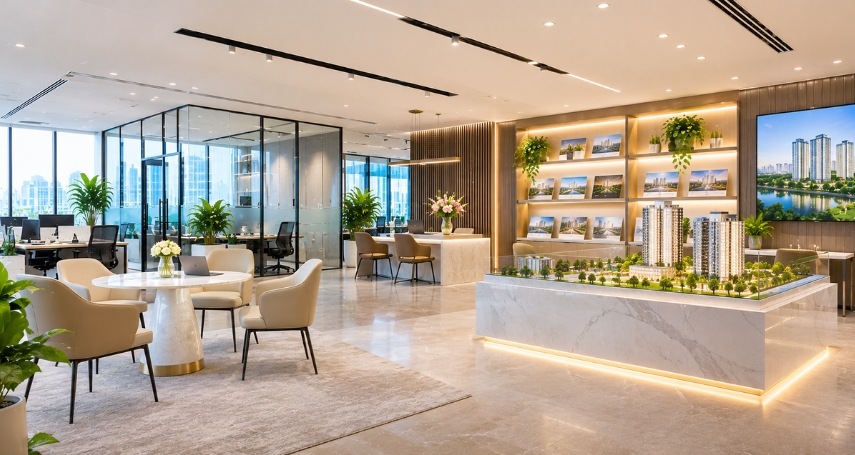
Real estate businesses, consulting firms, and brokerage agencies can use showrooms to introduce projects through scale models, images, sample properties, or sales materials. Combining these facilities with an office allows employees to welcome clients, provide product consultations, arrange appointments, and process transaction documents at one location.
A suitable space should include a separate reception area, meeting rooms, and space for displaying scale models or project presentation screens. Businesses should prioritize locations in densely populated areas, near urban developments, or along convenient transportation routes so customers can easily find the premises.
2. Benefits of renting an office-showroom combination
Renting an office combined with a showroom allows businesses to integrate management, daily operations, and product displays at a single location. This model offers several advantages in terms of costs, customer experience, and operational efficiency.
- Optimizing rental costs: Businesses do not need to rent separate offices and showrooms, thereby reducing rental, utility, management, and maintenance expenses across multiple locations.
- Improving customer accessibility and product experience: Customers can visit the showroom, try products, and receive consultations in person. This helps businesses shorten the product introduction and sales process.
- Enhancing brand image: A professionally designed display space allows businesses to showcase their style, products, and business capabilities, creating a positive impression on customers and partners.
- Connecting business and operational activities: Sales, marketing, management, and customer service teams can coordinate their work at the same location. As a result, product information and customer feedback can be handled more quickly.
- Increasing sales conversion opportunities: Customers can examine actual products, speak directly with staff, and receive quotations at the showroom. This is particularly advantageous for industries where consultation or product experience is necessary before purchasing.

3. Minimum floor area for an office-showroom combination
The required floor area should be calculated based on the number of products on display, staff size, and intended functions. Businesses should allocate space appropriately among customer reception areas, product displays, and office workspaces to avoid overcrowding and negatively affecting the customer experience.
Recommended reference areas for different business types:
- Fashion and accessories: From 40–60 m², sufficient for display areas, product shelves, fitting rooms, and workstations.
- Cosmetics and beauty: From 40–70 m², suitable for cosmetics counters, consultation areas, product experience zones, and small service rooms.
- Electronics and technology equipment: From 50–80 m², requiring space for equipment displays, product experience areas, and technical consultation.
- Furniture and home decoration: From 80–150 m², meeting the needs of displaying tables, chairs, cabinets, shelves, materials, and arranging office workspaces.
- Real estate and consulting services: From 50–80 m², sufficient for customer reception areas, consultation rooms, scale models, or project presentation screens.
- Automobiles, motorcycles, and transportation equipment: From 150–300 m² or more, requiring space for vehicle displays, consultation areas, and convenient access routes.
Note: These figures are for reference only and are not mandatory standards. The actual floor area should be adjusted according to the number of products, staff size, and functional layout of each business.
4. Considerations when renting a space for an office-showroom combination
To ensure that office operations and product displays run smoothly, businesses should carefully inspect the following factors before renting:
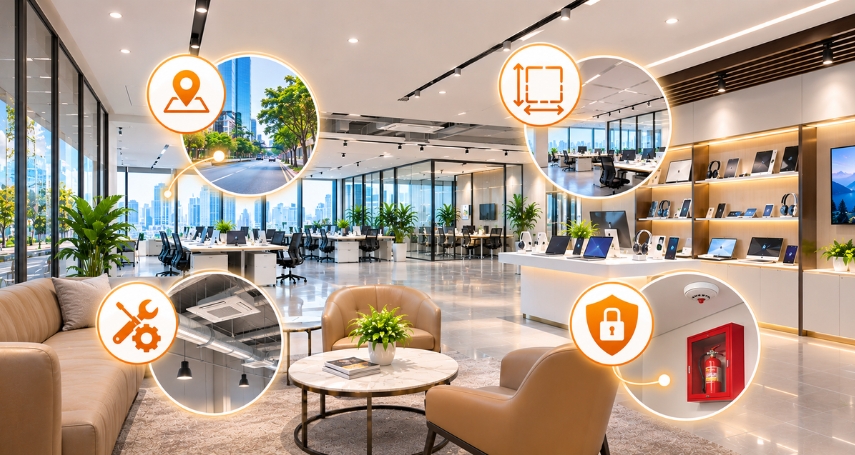
- Location and accessibility: Prioritize spaces with recognizable frontages that are convenient for customer visits and business transactions. For furniture, automobile, or household appliance showrooms, pay particular attention to accessibility and product transportation.
- Floor area and functionality: Ensure sufficient space for the showroom, office, customer reception area, and storage. For example, furniture showrooms require larger display areas than cosmetics or accessory stores.
- Infrastructure and renovation conditions: Check electrical capacity, air conditioning, lighting, and the feasibility of installing signage and partitions. In particular, electronics showrooms need a stable power supply to operate multiple product demonstration devices simultaneously.
- Security and fire prevention and firefighting: Check surveillance cameras, fire alarm systems, firefighting equipment, and emergency exits. Under QCVN 06:2022/BXD, renovations that change a building’s function or escape solutions may be subject to corresponding fire safety requirements.
- Costs and legal matters: Calculate rental fees, deposits, management fees, and fit-out expenses. At the same time, verify the landlord’s leasing rights and the permitted use of the premises, and clearly agree on renovation rights in the lease agreement.
5. A-Connection: Effective office-showroom leasing solutions
If your business is looking for a space that can serve as both an office and a product showroom, contact A-Connection for consultation and assistance in finding a suitable location. A-Connection connects businesses with available commercial spaces that meet their requirements in terms of floor area, location, and functionality.
Contact information:
- Phone: 0968 68 80 81
- Website: www.a-connection.com.vn
- Address: 708-710-712 Cach Mang Thang Tam Street, Tan Son Nhat Ward, Ho Chi Minh City
Conclusion
An office-showroom combination helps businesses save on rental costs, streamline operations, and enhance the customer experience. To find a space that suits your business requirements, contact A-Connection today for consultation on leasing options and connections with commercial spaces that meet your actual needs.
See also: