Tiếng Việt
 English
 简体中文

Choosing the right manufacturing location is a critical business decision. A factory’s location and facilities directly affect operational efficiency, logistics costs, machinery installation, and future expansion plans. Even a factory with an attractive rental rate can lead to significant additional expenses if its electrical capacity, structural conditions, transportation access, or fire safety systems fail to meet operational requirements.
Understanding the essential considerations for factory rental in Vietnam helps businesses identify suitable facilities, assess property conditions, and minimize operational risks. Rather than comparing rental rates per square meter alone, companies should evaluate location, floor area, technical infrastructure, legal compliance, and lease terms.
In this guide, A-Connection outlines the key factors businesses should consider when renting a factory or warehouse for manufacturing operations, helping them optimize costs and maintain long-term operational stability.
1. Define Your Manufacturing Requirements Before Renting a Factory
The first step in finding a suitable factory for rent is to clearly define your business’s intended use and operational requirements. Different manufacturing industries have specific needs regarding floor area, load-bearing capacity, ceiling height, electrical supply, and environmental conditions.
For example, mechanical engineering manufacturers may require reinforced industrial flooring, sufficient electrical capacity for heavy machinery, and dedicated equipment transportation areas. Food processing companies, meanwhile, may prioritize hygiene standards, water supply and drainage systems, ventilation, and temperature control.
Before beginning your property search, consider the following factors:
-
- Manufacturing activities: Identify your production processes, raw materials, finished products, and any specialized production requirements.
- Required floor area: Calculate the space needed for machinery, raw material storage, finished goods, offices, and supporting facilities.
- Workforce size: Estimate employee numbers and requirements for parking, staff facilities, and other amenities.
- Transportation needs: Determine the frequency of truck and container movements, loading and unloading requirements, and available yard space.
- Future expansion plans: Consider potential production capacity increases, additional production lines, or the need for more space during the lease term.
Defining these requirements early helps businesses establish clear property selection criteria, avoiding oversized facilities that increase costs or undersized premises that restrict production.
2. Choose a Factory Location That Supports Manufacturing Operations
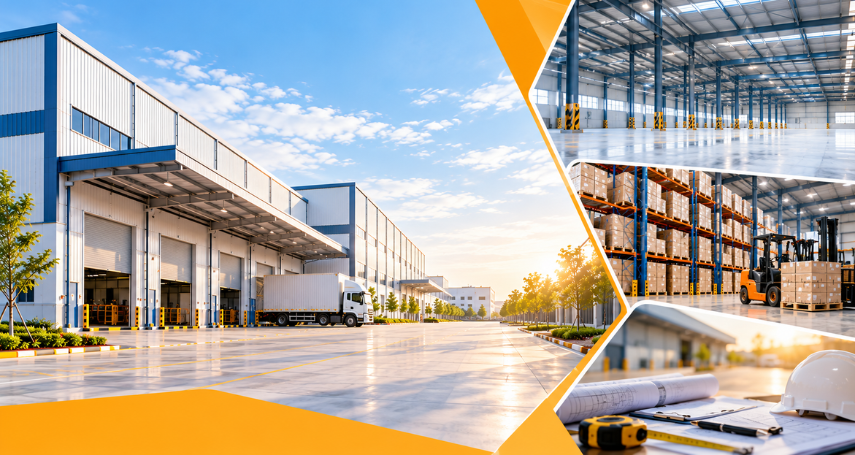
Location significantly influences transportation expenses, delivery times, and supply chain connectivity. When searching for a factory or warehouse for rent, businesses should consider proximity to raw material suppliers, customers, seaports, logistics centers, and major transportation routes.
Prioritize Locations That Support Your Supply Chain
For manufacturers heavily dependent on incoming raw materials, proximity to suppliers can reduce transportation costs and delivery delays. Businesses distributing products across multiple provinces may benefit from locations with convenient access to expressways, national highways, and cargo ports. For companies serving domestic markets, locating production facilities near distribution networks or major customers can also improve delivery efficiency.
Evaluate Transportation Accessibility
Beyond checking distances on a map, businesses should physically inspect access roads leading to potential factories. Important considerations include road weight restrictions, road width, vehicle turning radius, truck operating restrictions, and traffic congestion during peak hours. It is also essential to verify whether the premises provide sufficient parking, loading, unloading, and goods handling areas without disrupting production activities.
Balance Location Advantages and Rental Costs
Factories in strategically located areas generally command higher rental rates. However, choosing the lowest-priced property without considering transportation expenses, delivery times, and additional infrastructure investments may prove more costly in the long run.
Businesses should compare the total operating costs of different locations to identify the most economically suitable option for their business plans.
3. Calculate the Required Factory Space and Functional Layout
One of the most important factory rental considerations is determining the required space based on actual operational needs rather than current production capacity alone.
The factory layout should accommodate production lines, raw material storage, finished goods storage, packaging areas, internal transportation routes, and supporting facilities.
Poor space planning can cause congestion in internal material handling operations or force businesses to rent additional space unexpectedly.
During property inspections, distinguish between the leased floor area stated in the contract and the actual usable area. Structural columns, technical rooms, shared corridors, and auxiliary spaces may limit machinery placement and production efficiency.
Businesses should also prepare a preliminary factory layout before signing a lease agreement. This layout should identify machinery locations, material movement routes, storage areas, and operational access points.
Companies planning future expansion should prioritize facilities that can accommodate additional equipment or offer suitable expansion options.
However, any changes to building functions or structural modifications should undergo appropriate technical assessments and obtain the necessary approvals before implementation.

4. Inspect the Factory’s Structure and Building Condition
The structural condition of an industrial facility directly affects safety, equipment installation, and renovation costs. Before renting, businesses should arrange a property inspection with qualified technical professionals, particularly when operating heavy industrial machinery or specialized manufacturing lines.
Industrial Flooring and Load-Bearing Capacity
Assess the floor’s load-bearing capacity, surface evenness, cracks, damage, and suitability for machinery and stored goods. For equipment with significant concentrated loads, businesses should request technical documentation or a professional structural assessment rather than relying solely on visual inspections.
Clear Height and Structural Column Spacing
The factory’s clear height must accommodate machinery, piping systems, ventilation equipment, and storage arrangements. Column spacing also influences production line configuration and efficient use of manufacturing space. Businesses requiring overhead cranes, lifting systems, or specialized equipment should verify the building’s structural capacity before committing to a lease.
Roofing, Walls, and Drainage Systems
-
- Inspect the roof for leaks, drainage performance, and ventilation conditions.
- Walls, access doors, and loading entrances should also be suitable for the intended operations.
- In flood-prone areas, evaluate floor elevation, drainage infrastructure, and any available flood history.
- Existing defects should be documented in the property handover report to clearly establish each party’s responsibilities.
5. Evaluate Electrical, Water, and Technical Infrastructure
Reliable technical infrastructure is essential for stable manufacturing operations.
A factory may offer sufficient floor space but still require substantial additional investment if its electrical supply or water and drainage systems cannot support production needs.
Key infrastructure components to assess include:
-
- Electrical systems: Determine total equipment power requirements, the need for three-phase electricity, available electrical capacity, and potential upgrades. For high-load or continuous production operations, inspect electrical distribution systems, switchboards, grounding, and relevant safety requirements.
- Water supply and drainage: Verify water availability, flow rates, pressure, and drainage capacity. Industries generating industrial wastewater should separately assess collection, treatment, and connection requirements.
- Ventilation and temperature control: Depending on the industry, facilities may require ventilation, dust extraction, exhaust systems, or localized air conditioning. Identifying these requirements during inspections can prevent expensive modifications later.
- Telecommunications and security: Check internet connectivity, lighting, surveillance cameras, access control systems, and other facilities supporting production management.
All electrical, water, and waste treatment requirements should be verified against technical documentation, actual system capacity, and industry-specific operating conditions.

6. Verify Fire Protection and Safety Requirements
Fire prevention and firefighting compliance is a critical consideration when renting manufacturing facilities, especially those involving industrial machinery, combustible materials, or heat-generating processes.
Businesses should not limit their inspections to checking fire extinguishers or alarm systems. Instead, they should assess the property’s overall fire safety conditions and relevant compliance documentation.
Important items to review include:
-
- Fire safety design, appraisal, acceptance, or other documentation applicable to the building under relevant regulations.
- Fire detection, firefighting, water supply, and emergency response systems as required.
- Emergency exits, firefighting access routes, and unobstructed evacuation areas.
- Compatibility between the property’s approved or existing use and the proposed manufacturing activities.
- Responsibilities for fire protection system management, inspection, and maintenance throughout the lease term.
Existing fire safety documentation does not automatically mean that a factory is suitable for every type of manufacturing activity.
Changes in building use, production line configuration, or the handling of hazardous materials may require further compliance assessments.
These checks should be completed before signing the lease and before commencing operations.
Where upgrades or additional fire safety installations are required, both parties should agree in writing on the scope of work, costs, and responsibilities.
7. Verify Legal Documentation and Permitted Factory Use
Legal due diligence helps ensure that businesses can use their rented factories for their intended purposes and maintain stable operations.
Before signing a lease agreement, verify the landlord’s authority to lease the property, the property’s legal documentation, and any conditions affecting the proposed business activities.
Key considerations include:
- Leasing authority: Confirm the landlord’s legal status, ownership or lawful use rights, and authority to execute the lease agreement.
- Land use purpose: Verify the land’s designated use, applicable term, and compatibility with the intended manufacturing activities.
- Construction documentation: Review relevant construction permits, completion records, or other applicable documents and compare them with the building’s actual condition.
- Operating requirements: Identify relevant permits, environmental procedures, fire safety requirements, and industry-specific conditions.
- Use restrictions: Clarify limitations relating to permitted industries, noise levels, operating hours, waste treatment, and property modifications.
For factories located within industrial parks, businesses should also review industrial park management regulations, project acceptance conditions, and infrastructure availability.
Do not rely solely on advertisements or verbal assurances from landlords. Important information should be verified through appropriate documentation and clearly reflected in the lease agreement.
8. Calculate the Total Cost of Factory Rental
Monthly rent per square meter represents only one component of the overall rental budget.
To accurately assess financial feasibility, businesses should calculate the total cost over the entire lease period, including initial expenses, recurring payments, and potential additional costs.
| Cost Category | What to Verify |
|---|---|
| Rental payments | Rental rate, chargeable area, and payment schedule |
| Security deposit | Deposit amount, refund conditions, and permitted deductions |
| Taxes and fees | VAT, management fees, and other agreed charges |
| Electricity and water | Utility rates, metering methods, and payment arrangements |
| Factory modifications | Repairs, machinery installation, and infrastructure upgrades |
| Operating expenses | Security, cleaning, maintenance, and related services |
| End-of-lease expenses | Property reinstatement, equipment removal, and handover |
Businesses should request detailed quotations identifying included and excluded charges, as well as any rental adjustment provisions during the lease term.
It is particularly important to distinguish one-time capital investments from recurring operating expenses.
A factory with lower monthly rent may ultimately be more expensive if substantial electrical upgrades, flooring improvements, or technical system installations are required.
9. Negotiate Clear Factory Lease Agreement Terms
A well-structured factory lease agreement should accurately reflect operational requirements and clearly define the responsibilities of both parties.
This provides a contractual framework for addressing issues arising during operations, maintenance, repairs, or lease termination.
Before signing, businesses should carefully review the following provisions:
-
- Lease term and renewal: Define the rental period, rent commencement date, renewal conditions, and required notice periods.
- Rental rates and adjustments: Clarify rent, payment frequency, taxes, fees, and any agreed rent adjustment mechanisms.
- Repair and maintenance responsibilities: Specify which party is responsible for structural elements, roofing, electrical systems, water supply, drainage, and fire protection systems.
- Modification and equipment installation rights: Establish requirements for production line installation, additional construction, changes in building use, and prior approvals.
- Termination and property reinstatement: Agree on termination circumstances, notice periods, deposit treatment, installed assets, and handover conditions.
- Property handover documentation: Prepare a handover report recording floor area, technical installations, utility meter readings, equipment conditions, and outstanding defects.
For high-value or long-term lease agreements, businesses should consider having their legal department or qualified legal counsel review the contract before signing.

10. Conduct Site Inspections and Compare Multiple Factory Options
After shortlisting properties based on location, floor area, and budget, businesses should arrange physical inspections of potential factories.
On-site assessments can reveal issues that are difficult to identify through photographs or property advertisements.
During inspections, compare technical specifications against production requirements, verify transportation access, and document any necessary repairs.
Where possible, involve representatives from technical, manufacturing, and occupational safety departments to ensure a comprehensive assessment.
Rather than immediately selecting the first factory that meets basic requirements, businesses should compare several options using consistent evaluation criteria.
Properties can be assessed based on location, functionality, infrastructure, legal compliance, total costs, and expansion potential.
This structured approach supports more transparent decision-making and provides a stronger basis for lease negotiations.
11. How A-Connection Helps Businesses Find Suitable Factories and Warehouses
Finding a suitable manufacturing facility involves more than selecting an available property. It requires evaluating how well the building supports production processes, operational requirements, and long-term business development.
Through its factory and warehouse leasing services and industrial property portfolio, A-Connection helps businesses explore property options for storage, manufacturing, and industrial operations.
Clearly defining the required floor area, preferred location, technical specifications, and budget helps make the property consultation, shortlisting, and inspection process more efficient.
Businesses can explore the following resources on the A-Connection website:
-
- Factory and Warehouse Leasing Services: Learn about factory and warehouse leasing solutions tailored to business requirements.
- Industrial Factories and Warehouse Projects: Explore industrial properties, factories, warehouses, and industrial park projects.
- Phu Giao Warehouse and Factory – Binh Duong: View information about an industrial property featured on the A-Connection website.
When contacting A-Connection, businesses should provide information about their manufacturing industry, desired floor area, preferred location, expected lease duration, and specific requirements concerning electrical capacity, floor loading, fire protection, or environmental conditions.
This information helps identify suitable properties and determine which technical and legal aspects require further verification before signing a lease agreement.
Conclusion
Choosing the right factory rental in Vietnam requires a comprehensive assessment of manufacturing needs, location, floor area, building structure, technical infrastructure, fire safety, legal compliance, costs, and lease terms.
The most effective rental decision is not necessarily the property with the lowest advertised rate. Instead, it is the facility that meets operational requirements at a reasonable total cost while keeping potential risks manageable.
If your business is looking for a factory or warehouse for manufacturing operations, contact A-Connection at 0968 68 80 81 to discuss your requirements and explore suitable property options.
Establishing clear selection criteria from the beginning can shorten the property search process, reduce unexpected expenses, and support long-term business growth.
Frequently Asked Questions About Factory Rental
1. What are the most important factors when renting a factory for manufacturing?
Businesses should prioritize location, floor area, structural conditions, electrical capacity, water supply and drainage, fire protection, legal compliance, and total rental costs. The importance of each factor depends on the manufacturing industry and the technical requirements of its production processes.
2. Is renting a factory in an industrial park a good option?
Factories in industrial parks may be suitable for businesses seeking established manufacturing infrastructure, supply chain connectivity, and centralized property management. However, businesses should evaluate rental rates, service fees, permitted industries, operating regulations, and applicable administrative procedures before making a decision.
3. How can businesses accurately calculate factory rental costs?
In addition to monthly rent, businesses should account for security deposits, applicable taxes and fees, utilities, renovation costs, operating expenses, maintenance, and end-of-lease reinstatement costs. Preparing a budget covering the entire lease term helps businesses compare available properties more accurately.
4. What fire safety requirements should be checked before renting a factory?
Businesses should review relevant fire safety documentation, fire alarm and suppression systems, emergency exits, firefighting access routes, and compatibility with the intended manufacturing activities. They should also verify maintenance responsibilities and determine whether additional fire protection measures are required for their specific operations.
5. What is the ideal lease term for a manufacturing factory?
The appropriate lease term depends on production plans, machinery investment recovery periods, and facility modification costs. Businesses investing in fixed production lines may benefit from longer lease terms that provide operational stability. However, renewal conditions, termination rights, and related responsibilities should be clearly established in the lease agreement.